We use cookies to optimize your experience, analyze traffic, and personalize ads. Please choose whether you accept our use of non-essential cookies. Read More
The Kotaa community and the Modified Taungya System (MTS) groups in the Tain II Forest Reserve are celebrating the signing of a Social Responsibility Agreement (SRA) with the forestry company, Form Ghana, and the receipt of payment for their teak trees.
The payment and SRA signing ceremony was attended by the Queen Mother of Kotaa, Nana Yaa Oforiwaa Amanfo; the community’s Assemblyman; members of the Forest Services Division (FSD); MTS groups; members of the Kotaa community; and officers from Form Ghana.
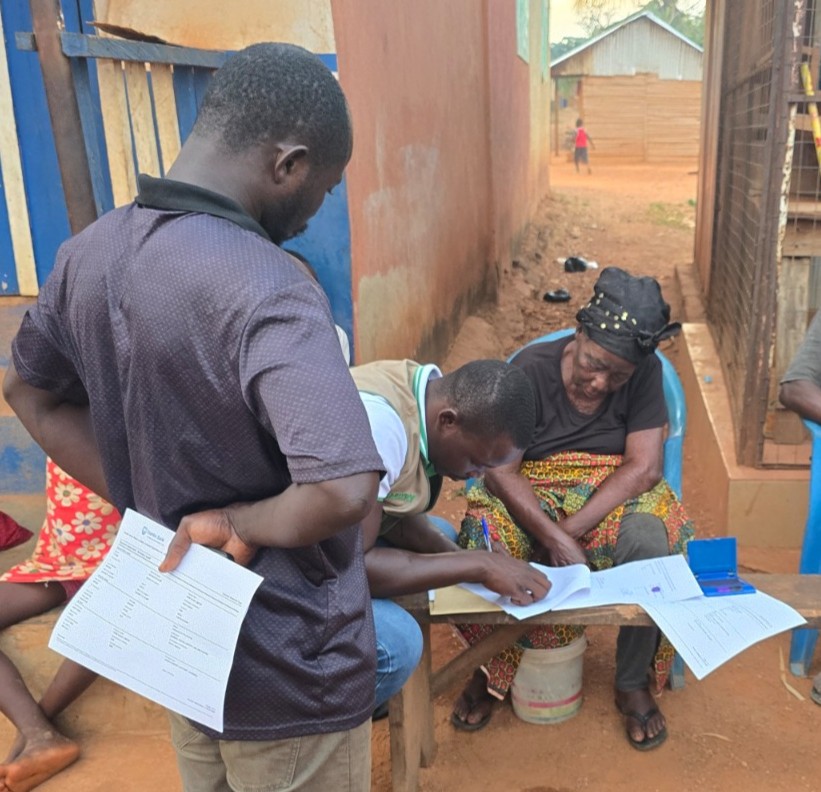
The Head of Kotaa’s MTS, Richard Ofori, praised Form Ghana for its transparent approach to ensuring that the groups and the Kotaa Community received fair and accurate compensation for their teak trees.
Form Ghana is a private forestry company appointed by the Forestry Commission to upgrade, reforest and manage the Tain II Reserve. When Form Ghana followed due process and expressed interest in trees that are older than 18 years, the Forestry Commission issued Form Ghana a permit to harvest eligible trees.
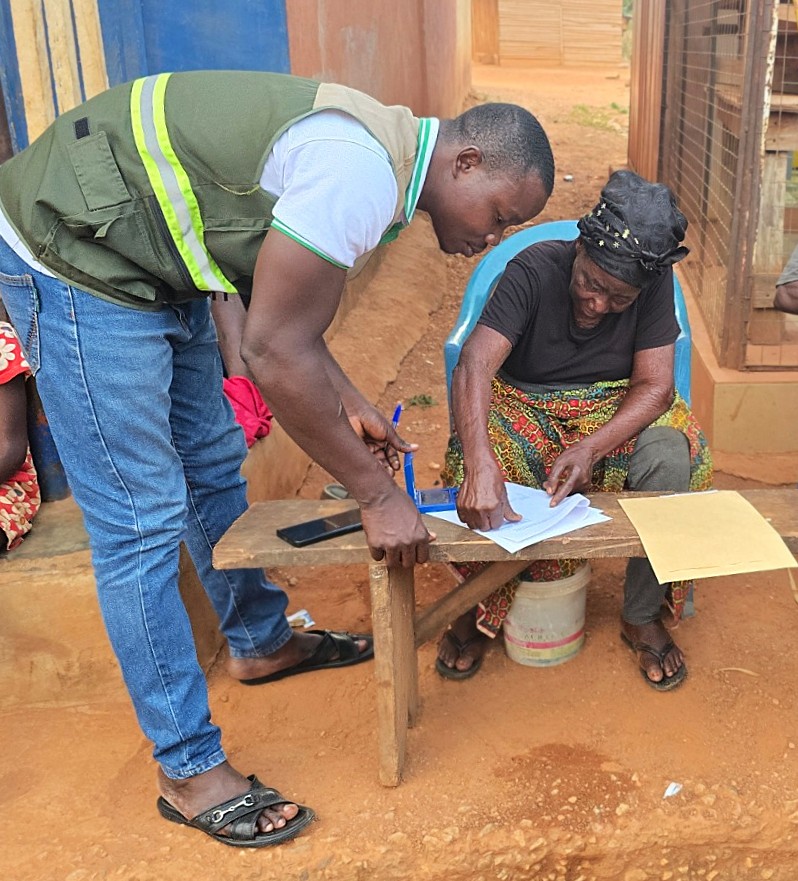
To determine the standing value, representatives from Form Ghana, the FSD, and the Kotaa MTS groups counted the trees and measured their diameter and height to identify individuals with a diameter at breast height (DBH)≥ 20cm. All parties unanimously agreed on the accuracy of the data and signed a confirmation.
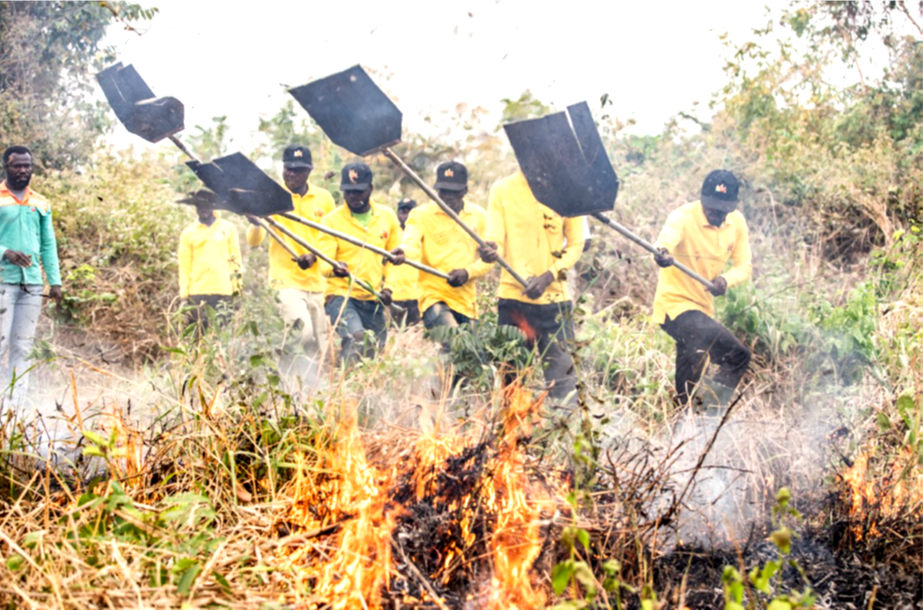
The fringe communities benefit from the roads Form Ghana has built and maintains in the reserve. These make it easy for the MTS groups to reach their crops, and the roads also serve as firebreaks. Ofori and the community leaders are thankful for Form Ghana’s firefighting training, equipment and early warning systems.
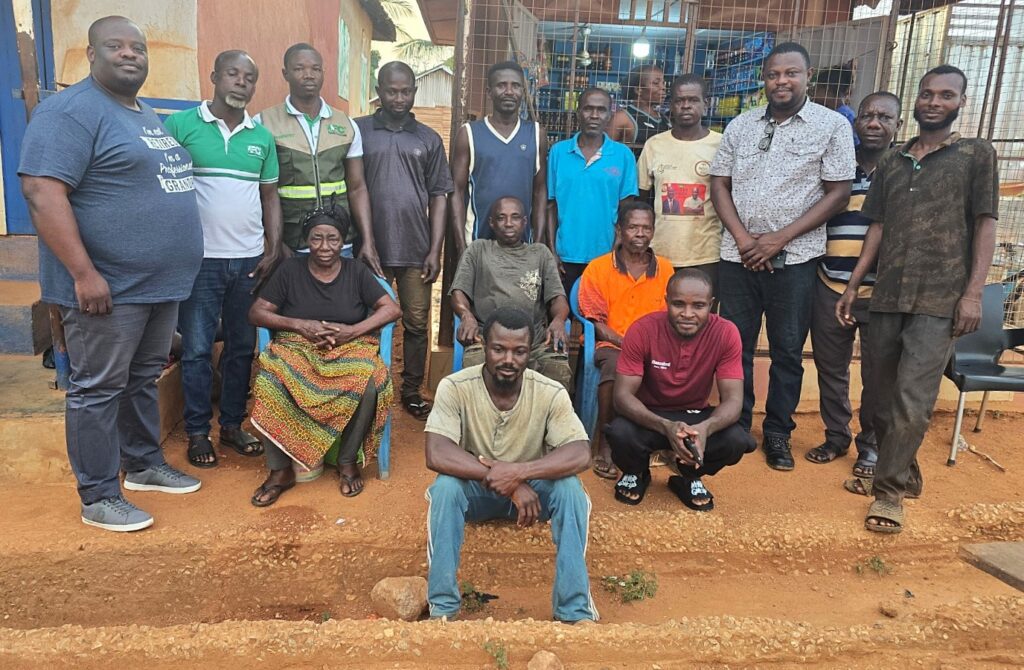
“Form Ghana’s insistence on accuracy has led to higher SRA payments to the Kotaa Community”, says Ofori. Willem Fourie, the CEO of Form Ghana, attributes the system’s success to the company’s transparency and respect for community members. He thanked the Queen Mother of Kotaa, the village community, MTS groups, the FSD, and other stakeholders for making the SRA payment possible.
The Northern Hemisphere is experiencing its hottest summer in recorded history. The daily media is dominated by reports of out-of-control mega and, recently, "giga" wildfires spurred by low humidity, high temperatures, drought, heavy fuel loads and strong winds.
In Sub-Sahara Africa, weather experts are issuing warnings about extreme summer environmental conditions driven by the arrival of the El Nino weather system. It means heat and drought or floods or all three.
Supported by scientific research, many commercial tree growers, farmers and private and public nature reserve managers know that a risk-based integrated fire management (IFM) programme focused on preventing wildfires is preferable to fighting fires.
West Africa
In West Africa, a Ghanaian company, Form Ghana, is cautiously celebrating the success of its strategy of integrating community-based fire management teams with community support, technology, enabling legislation, trained staff and volunteer fire teams, and other stakeholders.
Fire drives the deforestation and degradation of Ghana's southern tropical forests. Out-of-control wildfires are caused by the lethal combination of activities by cattle herders, illegal loggers, "slash and burn" crop farmers, miners and the harmattan. The harmattan is the dry and dust-filled northeasterly trade wind blowing from the Sahara over West Africa into the Gulf of Guinea from November to the middle of March.
Farmers and fire
Farming is the main occupation of people living in Form Ghana's neighbouring communities. They rely on fire to prepare the land for planting; however, bylaws prohibit fires during the dry season. In addition, the existing volunteer community fire squads insisted that farmers pay them for permission to burn and assistance during the burn.
Inevitably, farmers bypassed the fire squads and legislation and burned their fields in secret, leaving the fire unattended, resulting in runaway wildfires threatening crops, forest reserves and livelihoods.
Collaboration
"When Form Ghana began operations in 2017, a fire management system was an immediate priority", says Willem Fourie, Form Ghana's CEO.
"Through internal training and training by CMO, we were ready for fires starting in our plantations, but the frequency of fires originating from our 13 fringe communities was too much for us to handle".
Form Ghana approached the leaders and elders of three fringe communities about collaborating on an Integrated Community Fire Management Project (ICFMP). The communities agreed to the project, and it was launched in 2018.
Matthew Essuman, Form Ghana's commercial manager and the Berekum plantation manager at the time, says the ICFMP "was pivotal in opening a new and dynamic community-led relationship that supports our work to restore soil nutrients and biodiversity through indigenous reforestation and plantation forestry".
Community fire volunteer squads
The company revived the inactive community volunteer fire squad organisations (FVS) with the support of the traditional authorities and the Ghana fire service. The FVS interventions include:
Legislation
In October every year, Form Ghana supports the participating communities by formally applying to their local assemblies, traditional councils and municipalities for permission to "contravene the no bushfires bylaw" and implement safe and preventive controlled burns during fire season.
Fire danger index
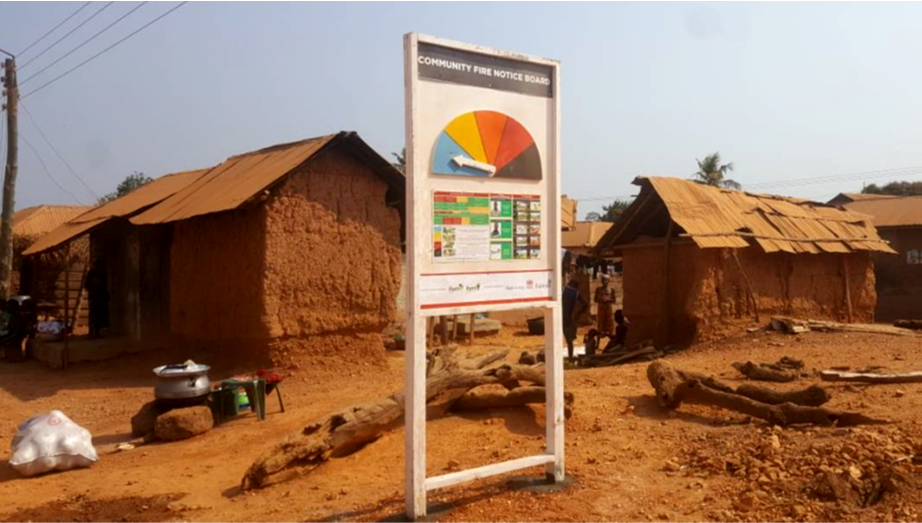
Form Ghana introduced the FDI and erected community information boards identifying the fire squad leaders, firefighting and controlled burning procedures and the FDI. In fire season, the plantation control rooms communicate with the squad leaders on WhatsApp to update the notice boards every two hours. Based on the FDI, the squad leaders permit farmers to burn.
Fire management plans
The community fire squads prepare a fire management plan and schedule for their community. The plan includes risk assessment, preparing fire belts around crop fields, assisting farmers with controlled burns on their farms, creating safety zones, clearing access roads, and a series of awareness and training programmes.
Access
Form Ghana upgraded the roads in and around the participating communities and within the forest reserves. It enables the ground crew stationed at fire lookout towers to report the location of smoke and for community and company fire squads to coordinate a rapid response to reach the spot.
Smoke is fire
However, on dry, windy days, fires grow and advance rapidly. Oliver Botwey, Form Ghana's geographic information system (GIS) officer, explains that by the time firefighters reached the reported spot, they were often almost helpless against the size of the front and flames shooting over 50 metres into the sky.
A more accurate and quicker detection was needed, and the company decided to invest in the Firehawk fire detection system. "I joined Form Ghana at the end of 2017, and my first task was to work with Firehawk's technician installing and setting up the system", says Botwey.
Firehawk
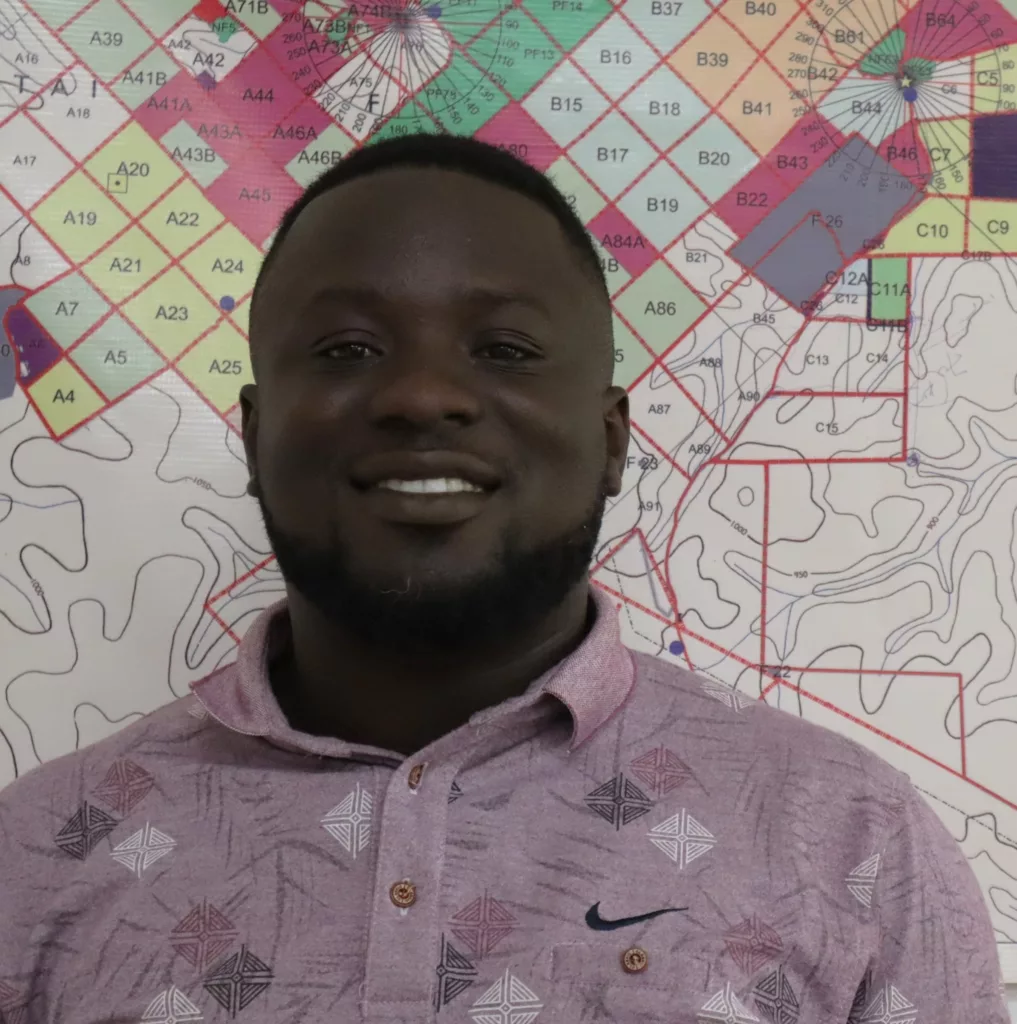
"We geo-referenced the plantation blocks so that the four Firehawk cameras can pinpoint the correct geo-location of fires and provide us with 24/7 real-time visuals via wireless communication links. Every link is remotely monitored, and the towers' voltage is tracked.
"Six operators, with at least two per shift, monitor the system and raise the alarm. At night there is an added benefit because we know immediately when vehicles with illegal loggers or poachers enter the area", he comments.
Success
There was a marked increase in controlled preventative fires and drop in wildfires since 2018, and between December 2022 and March 2023 no wildfires encroached on Form Ghana land.
When other communities saw the positive impact of the ICFMP, they contacted Form Ghana, and it now partners with nine fringe communities and 154 fire volunteer squad members.
Do you want to join our team?