We use cookies to optimize your experience, analyze traffic, and personalize ads. Please choose whether you accept our use of non-essential cookies. Read More
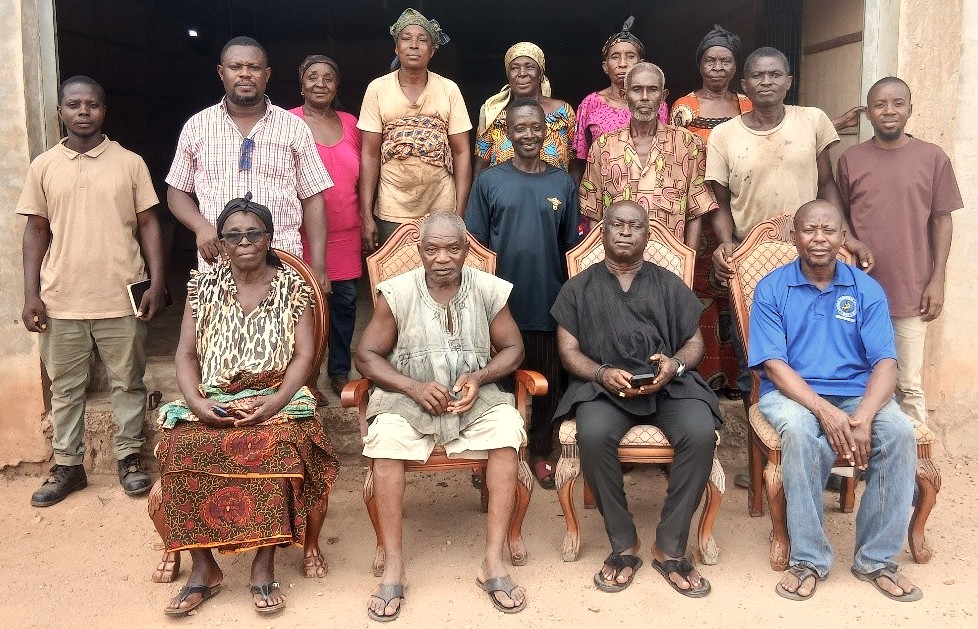
The Elders and Community Leaders of the Domeabra and Ampemkrom Communities are pleased to announce that they have each signed a Memorandum of Understanding (MOU) with Form Ghana, under which the company commits to rehabilitating, building, and maintaining certain roads.
Form Ghana is a 19-year-old Ghanaian teak forestry company specialising in rehabilitating degraded forestry reserves and striving to establish and maintain a culture of transparency, trust and safety with all its stakeholders.
Willem Fourie, the CEO of Form Ghana, emphasises that although its first obligation is to its staff, no rural company can operate without strong social relationships and direct communication channels with its fringe communities.
Form Ghana’s Social and Environmental Department regularly visits fringe communities and conducts annual social surveys.
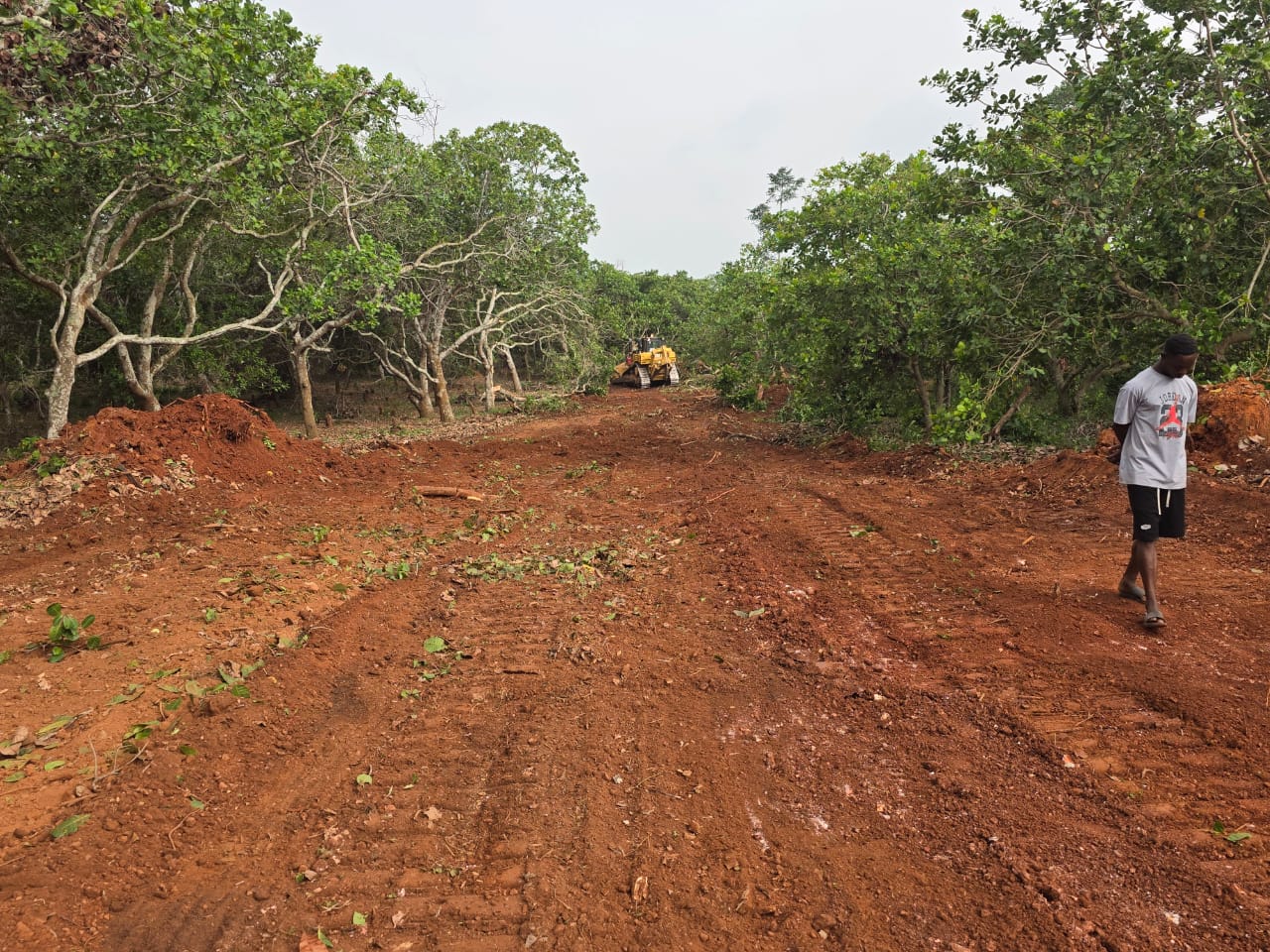
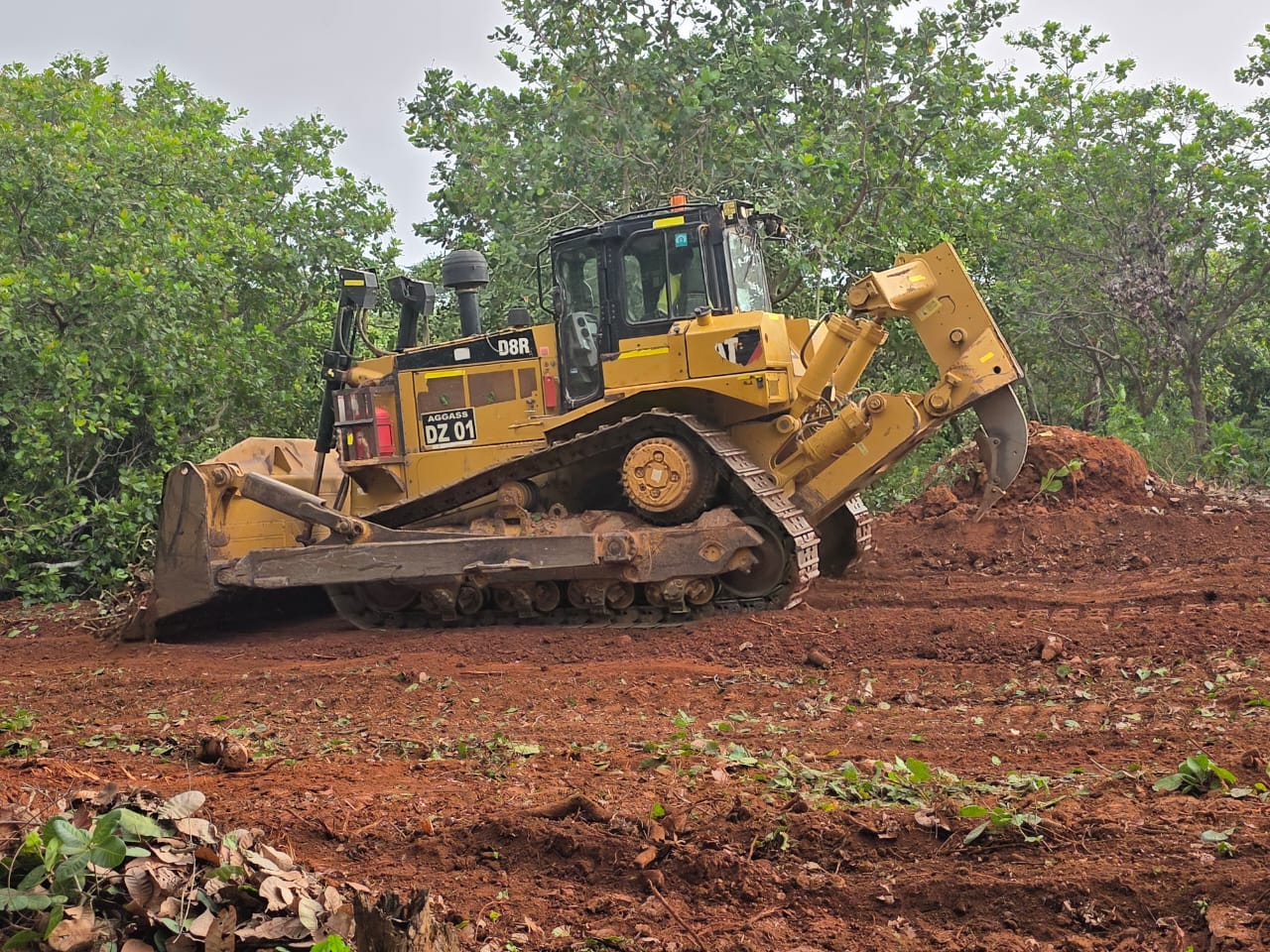
The Domeabra and Ampemkrom communities rely on income from cultivating and trading crops to support their livelihoods. Like agriculturists worldwide, the farmers near the Tain II Forest Reserve must manage diseases and pests that damage their crops. But their greater challenges are access to markets, healthcare and education, and the risks of wildfires and floods.
The Elders and Community Leaders of both villages believe that the only way to address the access problem is to have well-maintained roads, and each decided to approach Form Ghana for assistance.
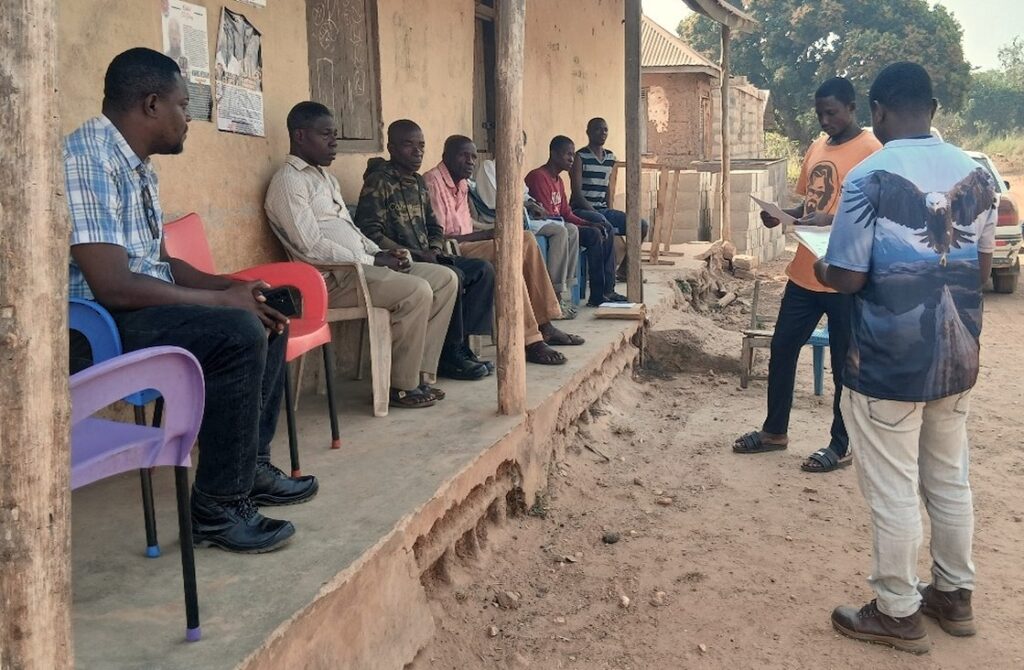
The Chief of Domeabra, Nana Ansu Adoma, the Elders, and community representatives formally appealed to Form Ghana to assist with rehabilitating and maintaining their community road. The road is an important lifeline for the village, serves as a firebreak, and provides access for firefighters.
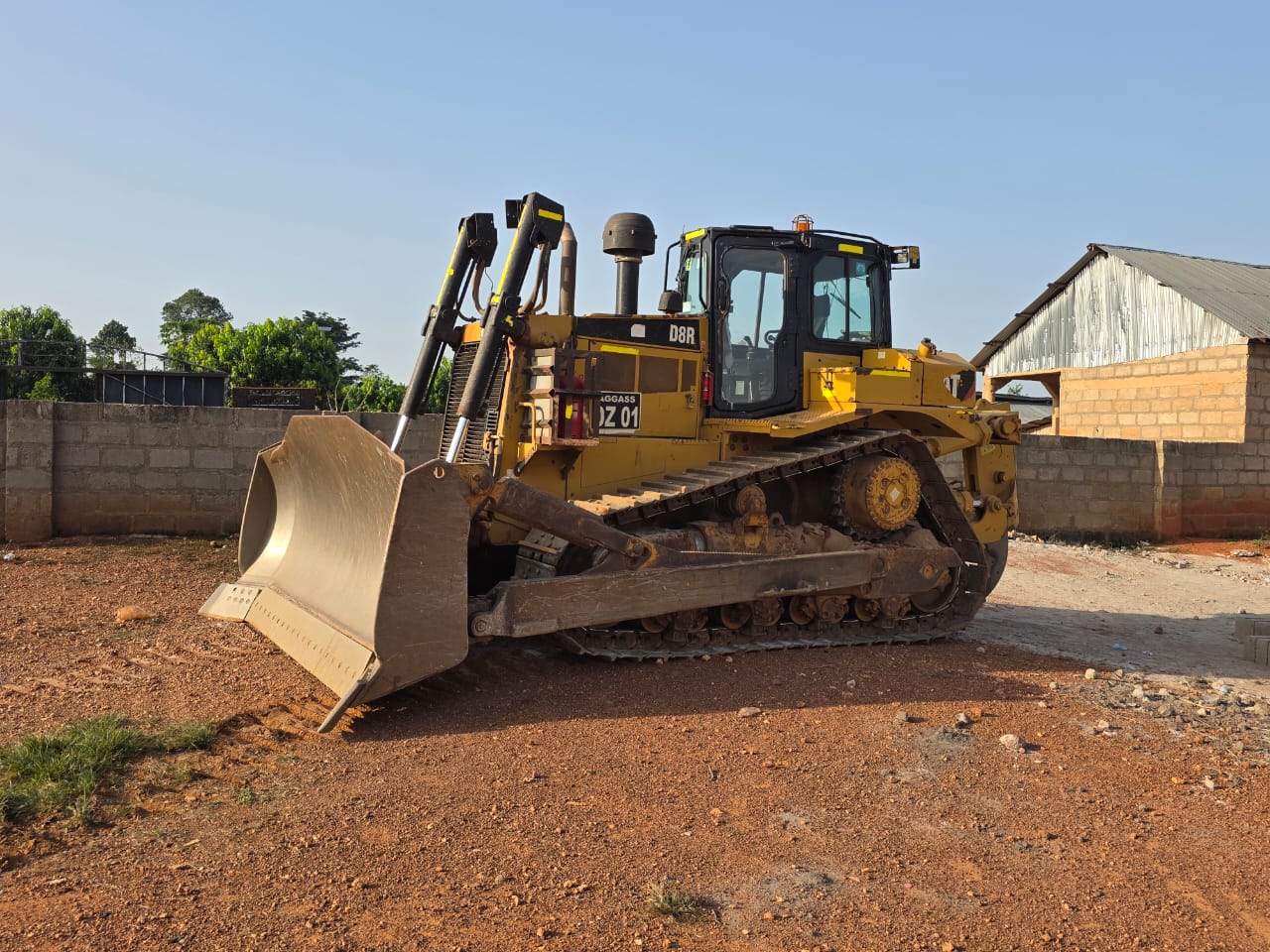
They signed an MOU with the company under which Form Ghana will grade a new road from Akrofro through the Domeabra community toward the Tain II Forest Reserve. The MOU was read out in Akan and English, and everyone agreed they understood it.
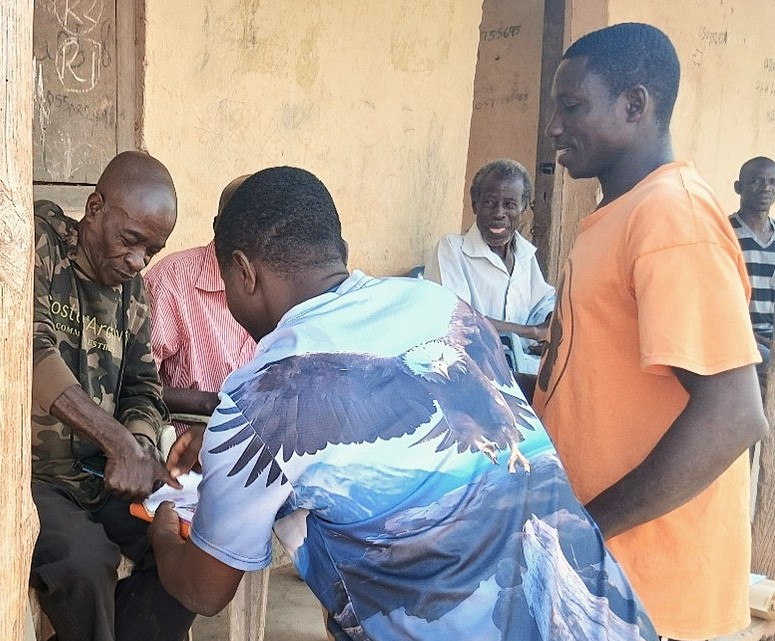
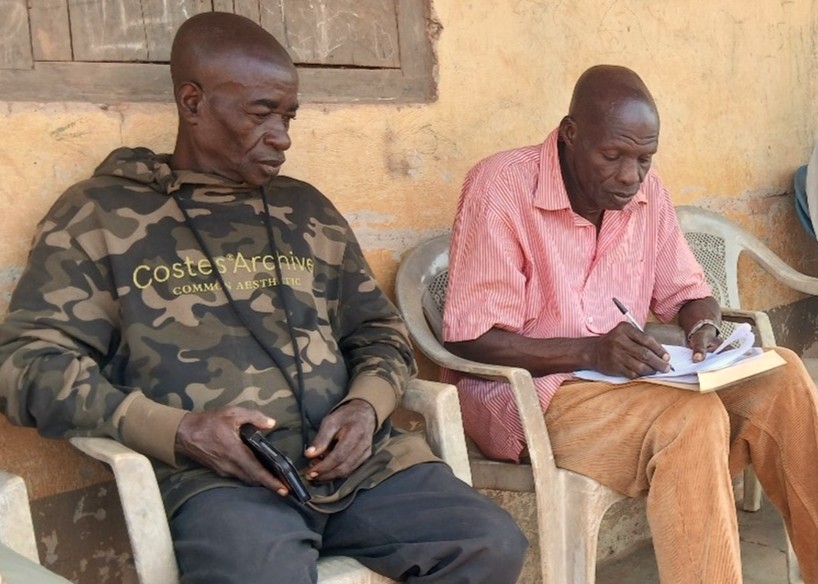
At the signing of the MOU at the Domeabra Community Palace on 27 January 2026, the Chief of Domeabra, Nana Ansu Adoma, commended Form Ghana for its unwavering support for firefighting and road rehabilitation and for its prompt response to development requests. He affirmed the community's support for Form Ghana operations.
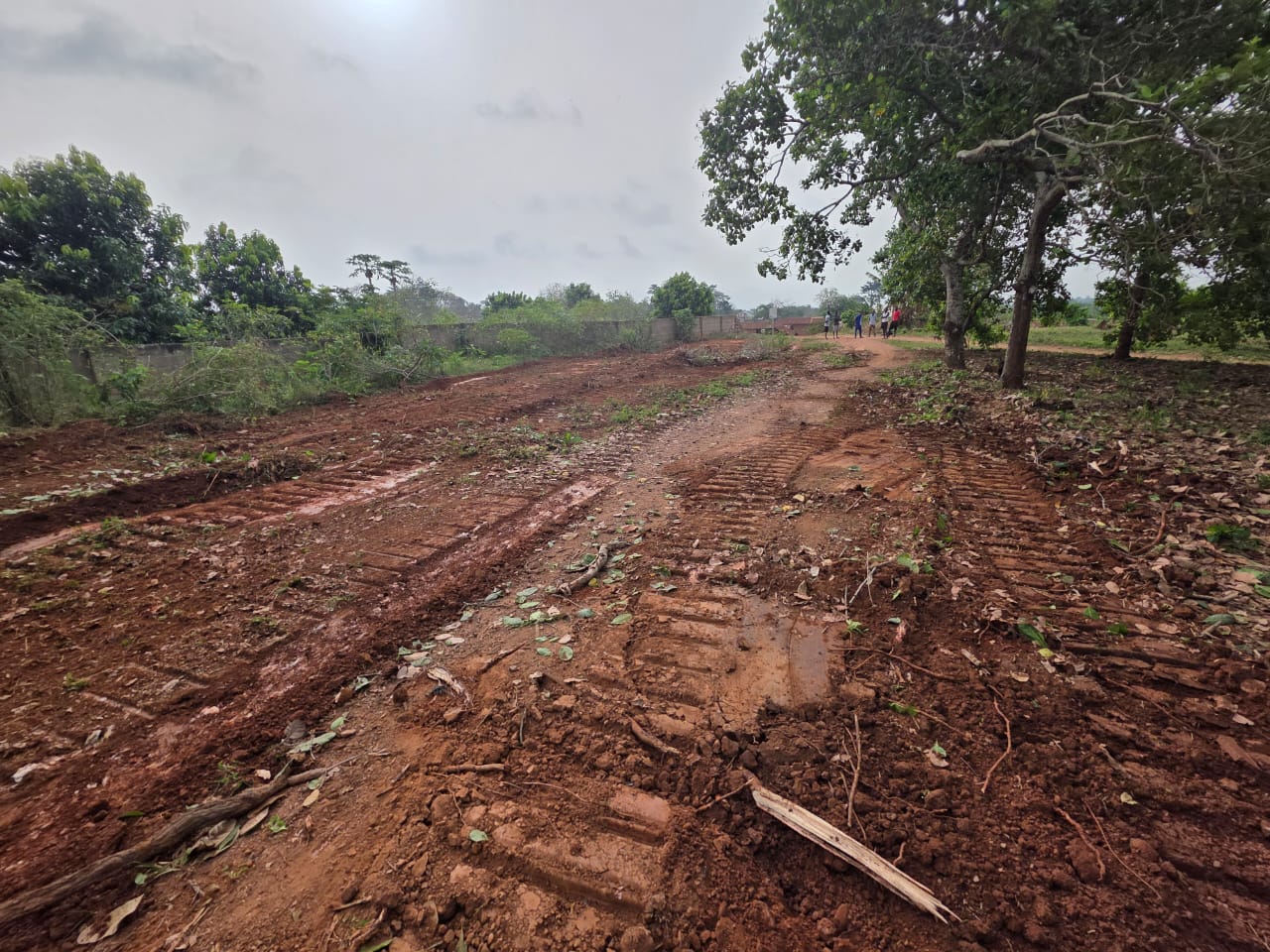
There is no road from Ampemkrom to its farming areas, making it difficult for farmers to harvest and transport their crops to the village and to markets in larger towns before they spoil. Their only access is a narrow footpath so degraded that neither a small motorbike nor a bicycle can safely use it during the rainy season.
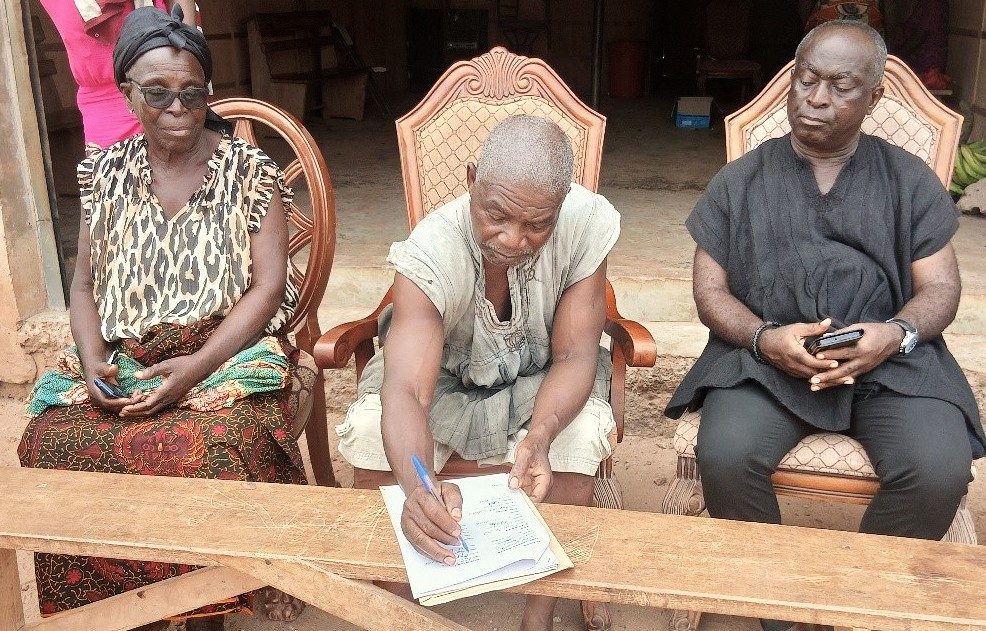
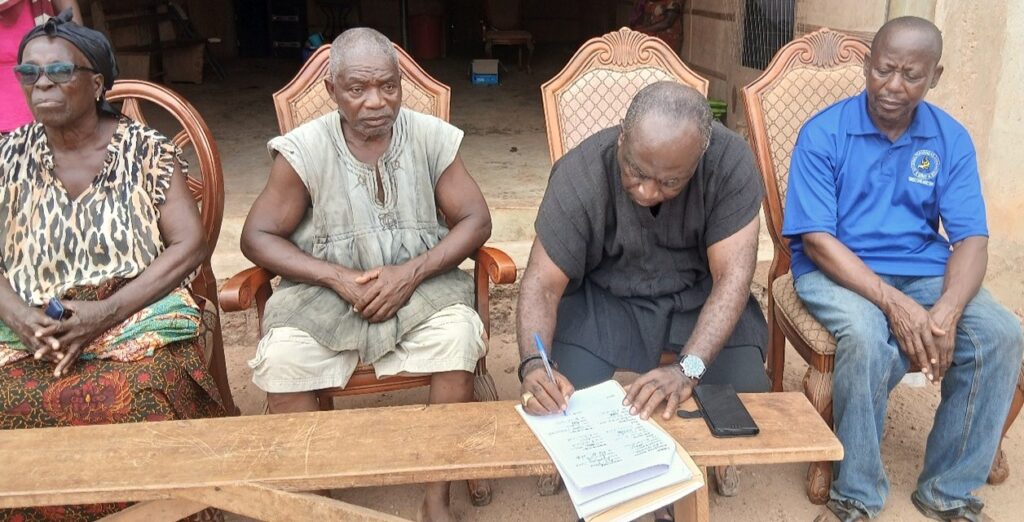
During community meetings and the annual social survey, the Ampemkrom Chief, Nana Kojo Yeboah, and Community Leaders formally requested that Form Ghana consider constructing a road for the community. Form Ghana agreed to assist them.
The MOU states that Form Ghana will build and maintain a new six-kilometre road towards the Tain II reserve, and was signed by the Chief of Ampemkrom. It was witnessed by Berekum Dabe-Hene, Nana Oppong Boateng Dartey II and community representatives on 6 February 2026. The agreement was read in Akan, and it was confirmed that everyone understood it.
Form Ghana participated in the traditional rituals at the Domeabra and Ampemkrom road sites. The purpose was to inform the ancestors and the spirits of the land about the project, ensure the safety of the workers, and appease the local deities. Their rituals also appease the ancestors, allowing unrestricted access for farmers and other road users, particularly for crossing the four streams, which hold particular traditional importance.
The Elders poured Schnapps before and after chickens and white sheep were sacrificed, and their blood washed the ground at the construction site.
Willem Fourie says the MOU represents a significant step toward sustainable road infrastructure development through partnerships rooted in social responsibility and transparency. Its successful implementation will deliver long-term socio-economic benefits for the Ampemkrom and Domeabra Communities and Form Ghana.
Paul Ontoaneyin, Form Ghana's Environmental, Social and Governance Manager, writes:
The starting point for safe living and work environments is recognising that everyone is responsible for their own safety and that of their family, neighbours and work colleagues.
Form Ghana believes a robust health and safety culture is essential for regulatory compliance and maintaining trust with our stakeholders. By prioritising safety, we ensure that our operations do not pose risks to the fringe communities while educating them and establishing understanding and clear lines of communication.
The company's Integrated Community Fire Management Project (ICFMP) is an excellent example of safety in practice.
Educated and informed communities are safe communities. Form Ghana's approach to integrated fire management is based on international best practices. The safety of firefighters and communities cannot be compromised.
Ours is a holistic focus. For over ten years, we have planned, managed and restored sustainable ecosystems by considering the impacts of fire from the perspectives of our staff, neighbouring communities, resources, and other private and public stakeholders.
Safety begins with community liaison. Mutual assistance agreements are signed with community leaders to form the Fire Volunteer Squads (FVS) and clarify roles, responsibilities, early warning systems, and incident command procedures.
Each community selects a local fire officer and fire squad leaders to manage the FVS at the community level. Speedy and precise communication channels, clear responsibilities, training and collaboration are vital before and during fire season. Form Ghana provides local fire officers with smartphones and call credits during fire season and maintains contact every two hours.
The incident command centre at the Berekum Plantation Office is the hub of the ICFMP. It relies on well-trained Fire Bosses and manual and digital early warning systems, including the Fire Hawk network of cameras on towers strategically located in the plantation.
Last year, 154 squad members were chosen from the nine participating fringe communities. They received personal protective equipment, firefighting tools and training in the Fire Danger Index (FDI), fire suppression and planned burning operations.
Do you want to join our team?